Saturday, March 12, 2011

Th Catcher in the Rye


Gosh, what a book. So,wow, how in the world do I start. Okay, well, we always have somewhere to start, right? Summary,then characters, then writing styles and then branching out into big stuff. Great great great, let's start.

K, so The Catcher in the Rye was first published in 1945, written by J.D. Salinger. So I'd like to say it's an attack on cynicism, but actually it's a whole bunch of things. So, main character is Holdne Caulfield, a 16 year old guy who's rebel to the extreme, real rebel, inward rebel. See he's very critical of everything and absolutely trashed because of it. The book starts with him getting expelled from Pencey high, a high-class prestigious stiff-collared boarding school for boys near New York; or so it would seem based on narration (first person past tense by the way) since Holden, of course, hates the place for being filled with phonies and all.Course Pencey must not be as bad as Holden lets on that it is. That's how this book works. You start with a bit of present tense, saying he's gonna tell you some stuff but nothing too personal. Fat liar he is. Actually he's skinnier than his own skeleton, but he's still a liar. He lies like a madman too. He's really good at it too. Well, see how I'm getting all unorganized and random? That's the effect of the book. It's insane guys. So yeah, the book goes on for three days, I think. It's actually pretty hard to tell. Anyways, he leaves the school yelling and has to hang around anywhere but home until Wednesday because that's when school gets off and his parents would let him back into the house without them figuring out he's expelled. He'd already been expelled before, by the way. It sucks for him.

So he got expelled because he failed all his classes, except English of course, since he's killer at English and commentaries and all. Well he's a pretty smart guy actually, but it's just that he just can't put in the effort because he doesn't believe in it. Yeah, yeah, great excuse right? Well actually, it's legitimate. Stuff like he failed the oral commentaries in English because if anyone started digressing while they were talking,the phonies in the class could all just start yelling at him and then he, the guy presenting, would never get better. But see Holden'd never call it better, because he's see nothing wrong in digressing anyways, because according to him, we digress because we're figuring out what is actually interesting to us, and thus for people to hear, and nobody actually knows what they're interested in until they'd been jabbering for a while. Stuff like that, and a million other reasons, mostly related to phonies and those rich jerks that pretend they're concerned and all.

This is Holden. Holden and his many thoughts. His thoughts are on anything but what's serious though. See there are a lot of awful things that happened to Holden, but he actually rarely talks about this stuff, only about practically anything else. I think my favorite's that part when he goes on about how Jesus is an alright guy and all, to tell you the truth, the Disciples are a total let-down. They kept screwing him over, like when they tried to send all those people away at the dinner for 5000, or like when Thomas denied that Jesus could have come back to life and stuff like that. And then that Christian guy'd say you're supposed to like the disciples and all since Jesus picked them, but the thing is, according to Holden, Jesus picked them at random, which makes all the difference. Then concerning Judas, according to the Christian, he'd go straight to hell since he committed suicide, but see Holden doesn't think he'd g to hell. He doesn't think Jesus'd do that. I don't think so either. These kinda thoughts. It goes on and on, not stopping. Great stuff.

When it comes to the real stuff, it's very depressing, like with Allie. Allie's his brother, little brother, who died. Holden broke his hand punching out all the windows in the garage after he died, so he couldn't go to the funeral since he was stuck in the hospital. That's all you ever find out bout his death really. See what I mean? That's awful stuff, you know, you're brother dying. But he rants about practically everything but it. There's this baseball glove that belonged to Allie. Allie wrote a bunch of poems on it so he'd have something to read in the outfield. Holden writes about it once. Then there's other stuff, like this kid James Castle that you only find out way later in the book that he jumped out of this window in this old school Holden went to, Whooton. Holden barely knew him, just lent him this sweater this one time, which he died in, by the way, and still, it's got Holden all tied up years later. Holden liked James because James died standing up to some bullies. He's one of the few people Holden likes, along with Allie. They're both dead. Very sad, you know. Still you get more of his opinion on lesbians and on sex freaks than on either of them. His writing style and action screams of them though. You gotta love it.

So I'm guessing you've noticed that there is to be no structure to this writing. Gotta keep going though. So Holden is pretty messed up and shows it. In the few days that we see of him, he spends most his time moving from bar to bar, hotel to hotel, taxi to taxi, randomly and wanderingly. It's painful really. He drinks a lot but he could hold it. He got a prostitute at one point but chickened out. He has to be in the mood for everything. He tries to buzz a bunch of people up, but he chickens out of that too. Not in the mood, that is. He tries to get taxi drivers to drink with him, cause he's so depressed and lonesome. He spends money like crazy, no control. He meets these nuns and donates at one point. He likes these nuns too.They're alright.He keeps asking where the ducks go in the winter, the ones from the lake at Central Park. No one tells him, but the fish apparently just stay there in the lake when it's all freezed up, their bodies always sucking in all that nutrition from the seaweed. Not sure there is seaweed in lakes anyways. Holden doesn't like it when people do things too well,like Ernie on the piano. He meets people once in a while but they're phonies so he hates them. Sally's pretty but she's an idiot. So's everyone else. Actually, people like Ackley and Stradlater, when Holden's not around them, he thinks their alright. He even misses them. Gosh, you know, it's so tragic. We all say we hate people when we rarely do, but well, holden's a madman, around this Christmas time. He really believes it, it's insane. He really hates people sometimes, and really loves them too. It's strange and it's saddening, but we love Holden always.

There's Phoebe, who's his sister. He loves her. It's rare that he loves someone, but he does love Phoebe. She's a littlun, but she's exceptional. She's smart, she almost always gets what you're going on about, more than anyone else has a chance at, at least. Phoebe's great, really. She kills Holden. She says the lines of movies before th actors do, and she points her own finger before the actor. She sits in the middle of a bed with her legs crossed like Buddha. She kills him. Well, see Phoebe knows though. It's tough. She asks the hard questions. Tells him who he is. That he hates everyone and that it sucks. Holden is a better person for Phoebe, in my opinion. Without who he would probably be floating in a ditch somewhere.

There's this one scene when he's walkin' around and every curb he passes he gets this huge suicidal urge, well, not suicidal but paranoid, scared. He then starts talking to Allie, dead Allie. Gosh it's sad man. Don't let me disappear, he says. Holden wants to disappear though. Well, see Holden has this idea stuck in his head: escape. He wants to live in the woods at one point, just with his wife and kids, in a house he'll build himself. He wants to and almost does run off and away to Colorado or wherever to work on some ranch. It doesn't happen. He backs out.He backs out of everything. He's a modern hamlet, really. That's who he is: Hamlet. There's this teacher, and old English teacher, Mr. Antolini, who's nice and puts up with Holden. He actually enjoys Holden and his thoughts and very much his writing. Mr. Antolini tries to help him, telling him about the importance of school and measuring the size of your mind and all. It's perfectly reasonable and wise too. It's just Holden's wasted and wrecked and all, so it just doesn't register, what could have saved his life. Course it's not like his life is lost. It's still there, but see he's heading for a fall though. Mr. Antolini said that, Holden listened, but it doesn't work. Holden claims he's a pervert and runs put. Very tragic happenings. But he'll survive. He always does.

See now it seems that this book would be the most depressing story ever, doesn't it. Well, thank goodness for Holden being the narrator because he's really the only thing that keeps this book fun and light. The book is super fun, really, and it's all because of the writing style. See he says certain things that are repetitive and awesome. Stuff like 'and all', 'if you wanna know the truth', 'That kills me' and all. Also, he adds 'hell' and 'goddam' all over the place. Great stuff. I'll put in some excerpts. That'll get you into it. See it's not some juvenile junk that is just used to be enjoyed and laughed about cause it's 'so cool that it's fun an cool and respected at the same time. This guy gets us; look at the words he uses.' Gosh, that's just annoying. You could call a book cool, but you can't just say that and nothing else. This book has this voice and style because it is fitting. See you need the lightness because it keeps the book from being annoying. Nobody wants to hear a guy whine for 200 odd pages. He has great use of italics too. On specific words and syllables. It gets real voice in. There's a whole lot of description in the book and not all that much that's significant happens. There's no massive plot nor twist nor climax, just time and Holden. Holden, you have to love him, and more than anything, you have to love his words. If you love the two, it's great. The characters are mostly all to be loved though.

There's one last thing. It kinda gets creepy, the cabin idea, because that's how Salinger ended up. Could this be autobiographical? If it is, that's very saddening, really.Most everyone can relate to this book. I certainly do a lot. It's not a moral-pounding book. It's not patronizing, it's self-absorbed. It's a story about Holden only, no one else. While you're watching you become forced to sympathize and relate and then once you love, well, it makes a difference, really.

The Catcher in the Rye scene is wonderful. It's subtle. You have to wish to understand and you have to know Holden. It really just shows how wonderful a person he is. He's lovely, and he's tragic, and he's a martyr and a hero. It's golden and the cliff has a vertigo and Holden on top with the kids. He's a father. He loves English. Read Shakespeare, Maugham, Hardy and such. He wants to phone the authors. I love that. He loves Jane. It's all very good.

"If you really want to hear about it, the first thing you'll probably want to know is where I was born, and what my lousy childhood was like, and how my parents were occupied and all before they had me, and all that David Copperfield kind of crap, but I don't feel like going into it, if you want to know the truth. In the first place, that stuff bores me, and in the second place, my parents would have about two haemorrhages apiece if I told anything pretty personal about them. They're quite touchy about anything like that, especially my father. They're nice and all-I'm not saying that-but they're also touchy as hell. Besides, I'm not going to tell you my whole goddam autobiography or anything. I'll just tell you about this madman stuff that happened to me around last Christmas just before I got pretty run-down and had to come out here and take it easy. I mean that's all I told D.B. about, and he's my brother and all. He's in Hollywood. That isn't too far from this crumby place, and he comes over and visits me practically every weekend. He's going to drive me home when I go home next month maybe. he just got a Jaguar. One of those little English jobs that can do around two hundred miles an hour. It cost him damn near four thousand bucks. He's got a lot of dough, now. He didn't use to. He used to be just a regular writer, when he was home. he wrote this terrific book of short stories, The Secret Goldfish, in case you never heard of him. The best one in it was 'The Secret Goldfish.' It was about this little kid that wouldn't let anybody look at his goldfish because he'd got it with his own money. It killed me. Now he's out in Hollywood, D.B., being a prostitute. If there's one thing I hate, it's the movies. Don't even mention them to me."

Read folks, Read.

Saturday, February 26, 2011

A Doll's House


A Doll's House is a play that was written in 1879 by Henrik Ibsen. I read it yesterday, translated by Michael Meyer. Very interesting, especially in comparison to Hedda Gabler, also written by Ibsen.

So this play is about a married couple, Nora and Torvald, who are very happy together, but whose happiness hang with a balance of secrecy and reasonable social behavior. See Nora had borrowed some money from Krogstad, whose a bad and manipulative guy. A bunch of trouble emerges from this, threatening the couple's relationship. Beyond this are spoilers. Remember though, it i the writing that matters. Oh, yeah, and the characters.

So, the characters are the most important aspect of a book. Here we've got Nora, Torvald, Krogstad, Dr. Rank, and Mrs. Linde. Nora is by far the most interesting, I think. This is because of the way Ibsen unrolls her character. It starts out at the very surface and then goes deeper and deeper. See, so in Hedda Gabler, there are very many characters with many underlying motives that make them deceptive and speak with subtle hints and manipulative lies, especially Hedda. Only Tesman, Hedda's husband, really said what he believes very clearly and naively. However, in A Doll's House, the characters speak far more directly.

Ibsen must have a thing about intelligence and husbands. He has whatever anti-feminists for women are but for men. Tesman is a great guy. He is genuinely kind and wonderfully generous and loving. He has bits of panic and fear with true emotion, but other than then, he is very level and amiable. Same goes for Torvald.

So then now we are even right? Between the two plays. But then we have the doctor versus the Judge in Hedda Gabler. So the judge is a very conniving, intelligent and awful person, what with his love triangles and trains and all. But then there's the Doctor. Now I'm comparing these two because they both have a secret crush on the leading lady. Dr. Rank's love though, is not very aggressive. He comes and sees her ever day and Nora is always oblivious, but he enjoys her and quietly holds his love. It's very sweet really, and he gets a bit carried away (which you could tell because his form of address changes from Mrs. Helmer to Nora) but well, it's not like he's blackmailing her like the judge did. He hides the love, says he'll do anything for her, and plus, he's dying. You have to give him some leeway for that. So basically, we have another good guy for A Doll's House.

Mrs. Linde and Mrs. Elvsted. They were both old friends of the leading ladies and both very nice people. They are both little points of jealousy for the leading ladies. Elvsted wrote a book with Eilert, and feels very accomplished and has a nice set motive in her life: to help Eilert. Hedda has no such motive, she is just very bores, and at that, bitterly. Christine (Mrs. Linde), has a set motive too, to support herself financially in the real world. She struggles, but in the end, is proud of her accomplishments and hard work. Nora is married and has no such experience. She is very much a kept woman, a doll. So Hedda and Nora are both married to men that love them dearly but see in their old friends a life they could not have, a life of independence. Both the sub characters are genuinely good people. They are innocent. They look out for the best for their friends. Elvsted allows herself to love Hedda and does her no harm and trusts her. Christine goes a bit further, consoles Nora, and actually accepts Krogstad to spare her friend his vehemence. Then again, though Krogstad pulls back on the evil a bit by returning the I.O.U, when he offers to take back the letter, revealing Nora's scandal to Torvald, Christine tells him not to. I'm not sure Elvsted would have done this. Christine doesn't just do what Nora thinks would be best for her. She does what Christine herself believes is best for her friend. She turns out to be right, and so seems pretty wise, maybe wiser than Elvsted. Anyways, so we have another
good person for A Doll's House.

One more short point about Christine is that her motives somewhat match Auntie Juju's. She is a widow who has no one to care for. She doesn't accept Krogstad just for Nora, but also because she wants more purpose in her life than to work for herself alone, as Auntie Juju feels after Miss Rena dies. She says "I must work if I'm to find life worth living. I've always worked, for as long as I can remember. It's been the greatest joy of my life - my only joy. But now I'm alone in the world, and I feel so dreadfully lost and empty. There;s no joy in working just for oneself. Oh, Nils (Krogstad), give me something - someone - to work for." This could be connected to how Hedda feels too, I guess, in the end of Hedda Gabler, when she is alone but for Brack who is blackmailing her. She shoots herself then. Christine, instead, turn to Nils, and in doing so, also helps her friend. This having no one to work for, and that being awful, and the awfulness of loneliness is quite the interesting contrast to Nora's decision in the end to go off and find herself. That's what Christine had already done, and she finds she'd rather fulfill her "sacred duties" as Torvald says, as a woman. Nora, on the other hand, find that she'd rather deal with loneliness rather than lead a false life with people she does not love. Something to think about. Very different views on what is awful and what is bearable. A good example of the book's message on how to find meaning in life and living.

So then we have Krogstad, who I suppose can be compared to Judge Brack on the basis of blackmailing, and also because he associates separately with Nora and her husband, as Brack does to Hedda and Tesman. Krogstad is a strange character though, Id think the most unrealistic character in this book. See Krogstad was a disappointment for me in this book. He is the antagonist, but is a very unfulfilling one. The antagonist in Hedda Gabler was great because it was also the protagonist, and as the play goes on, Hedda is revealed to have vulnerabilities that make her evil crack to greater evils, and so in the end comes the very fulfilling climax of Hedda going out in such dramatic ways. Hedda is an antagonist, and we readers who have moral sense don't particularly like what she does, but we do enjoy it with the justification that the play is fiction. And so, in the end, when Brack starts pulling her down and her evil acts catch up to her, rather than feeling victory as the antagonist is being pulled down and justice is being served by the judge, instead, we readers forget about all the awful things she did, saying it's just her way, and then we feel sorry for her. When she finally ends her life beautifully, according to her criteria of suicide, we feel not exactly happy for her, but it was just meant to be that way. Proud of her would do, since people usually don't do such things and all.

HOWEVER, Krogstad is simply an antagonist.Hedda's justification for evil is that she's bored, she's smart, and she finds watching people squirm amusing; she enjoys power. Tat is a very intriguing reason because it's just so evil, it's so confident and taunting, and we can kind of relate to it. Krogstad's justification is barely explained. It's just something work-related. He wants a promotion. What a lame excuse, right? So boring, and then he goes about this blackmail in the weirdest way. I guess it must make more sense then, but in modern day, well, reading it, it just doesn't seem so bad, borrowing money. It's not a scandal. Then again, Krogstad does have the power to write scandalous news to ruin Torvald, but still, lame. A piece of paper in compared t a smoking gun is disappointing, really. Anyways, then, he turns out to be such a softy! Ew, I mean, come on, nobody likes a reformer. When Christine says that she'll be with him, he' so happy and suddenly says sweet words of love that are completely not befitting an antagonist. Nobody changes that quickly. Nobody gives up their year long ambitions at a drop of a hat and proclaim love and saintliness. Krogstad does though. Nils...Come on, really. Wow. Total downer. Well anyways, he drops out of the play quick; he's a useless character. Oh gosh, I could go on ages about him. Whatever, well there's a lukewarm character for A Doll's House.

So then there is Nora. We have good characters and a lukewarm one, a maid that is a nice person and children that you feel sorry for because their mother is at flight-risk. Then there's Nora. She's interesting. AT the beginning of the book. I read a bit and then said "Gosh, I hate Nora, she's such a childish greedy spoiled character" Then a few pages later, she started to change, explaining her motives to Christine. Then I felt bad for judging her so quickly and was proud of her for working so hard for her husband and happy for her for being so proud of herself for having a motive. There's a contradiction from before. Nora isn't completely kept and at loss of purpose in life. She is working on her debt. She is working independently. She is enjoying this pressure and enjoying her success. When she said she made copies and I realized Torvald thought this was when she was working on flowers, I was so glad, you know. This change in character is very interesting because you get to see for a moment what Torvald sees. You also see how good an actress Nora is. Nora has two faces. She is the doll for her husband and she is the independent woman for herself. That's always interesting. That is very Hedda of her, and Brack, I guess. But she is not Hedda. She is not evil. She is very good, actually.

When things start going wrong though, she starts panicking. That part with her and the kids is very hard to read. She has to reassure her kids that she's alright and she has to hide them from her troubles and the kids are hurt by it. Then when she talks to the maid about leaving them, that is very difficult to read too. You start thinking how together she is s a mother. No mother, in my opinion, should very be able to leave their kids. Maybe if you're like Fantine, it's justifiable, but with Nora, she only is thinking about herself. She's not a bad person. She's not with a purpose to serve her kids in leaving. She should not be able to leave. I find that the most disagreeable thing with this character.

Anyways, moving on, her and her dad. When she describes her relationship with her father and with Torvald to the doctor, it is iffy again how much she really knows about her situation. You really start questioning how clearly she sees herself during the play. When she does the acts to Torvald, switching so quickly from angst with Christine over the debt to pleasantry to the Doctor and stupidity to Torvald, it's sort of disturbing and sick. How can she stand that he sees her as stupid? How can she stand being intentionally dumb? It's frustrating, really, very. The whole songbird. squirrel stuff? Really? It's so belittling and dense. I hate it. Around her husband, all she talks about is prettiness. Torvald is an idiot, really. It's creepy too, how turned on he is by her dancing. It's very much blind. She really has a blind spot in her brain on what she looks like. Oh gosh. It's unbearable.

Well, then there's the climax. Very very shocking. So it's an absolute explosion at one point with huge blocks of words from Torvald It's the only time a character speaks so much, and it's really harsh. He doesn't acknowledge the fact that Nora does this for him at all. But then another letter comes and all the problems go away and it's so quick. Then Torvald is suddenly very happy, proposes that they forget it ever happened and proclaims that he forgives her, like he's such a saint for that. It's very frustrating and then she goes through this change. It happens, I think when she stands up and quietly leaves the room, it's so calm, frightening and then she comes out in day clothes, and you know something's different. Nora then has a serious talk with Torvald, their first one ever, and then she tells him very bluntly that she doesn't love him, that she's leaving, she immediately leaves, and then she's gone and the play ends. She finally realizes all that we've been seeing, that she's Torvald's doll, and she is leading a very controlled life, that her husband does not really love her for who she really is, and that she has to find herself. It's all very feminist and very reasonable. But then again, she leaves her children. It's so wrong. personally, I think once a woman has kids, she herself is still very important but her children must always come first. It's very wrong, her leaving, but it's very interesting sill, how Ibsen unrolls the plot. This is a constant plot, where Torvald ends up being the well-meaning antagonist, and it's all very tragic for him. He must be so confused. But it's just great that this thing, this miscommunication had been occurring this entire time, and only when the fabricated reason for Nora's life, the debt, and the threat that brings her excitement explodes and falls does she realize this issue. The fact that this revelation and resolution comes so quick to Nora is somewhat unrealistic, and the probability that it actually would stick is pretty low. But it is interesting how the twist occurs and how all this climactic momentum disappears to reveal a further more intimate issue with a far more interesting resolution then avoiding a scandal.

So there are finally themes and I realize now just how absurdly long this blog had gotten. SO tired. Ok, so first there is boredom. People keep saying their bored. Look out for it. It's very Hedda Gabler. There's the morals of society. Lies and laws and all. Then there is the focus on society and what the people would think. This goes with Hedda too. Then there's the issue of suicide again. The famous "People don't do such things" comes up, and though you don't actually come t that, it's pretty interesting still. There's the issue of duty and responsibilities that come with relationships, like with kids and husbands. Same with Hedda. And last there's the purpose of life, particularly for women. Very Hedda. They do address things about religion near the end. It's just kind of thrown in. It may be more Ibsen than anything else, since it's so sudden and disappears so quickly. What is religion? It doesn't seem to mean very much, actually, it doesn't affect judgment or action much.

Last thing, remember to take notice to those little side conversations Ibsen throws in, like Torvald telling Christine how to embroider and how it's better than knitting. You notice sometimes how he intentionally puts this stuff in to show how the personalities and opinions of a character and a character's relationship with others it revealed by these little conversations without motive, only small unfocused, unfiltered, unplanned personal thoughts.

K finally, the quotes.

Christine: But surely it's the sick who need care most?
Rank: (shrugs his shoulders) Well, there we have it. It's that attitude that's turning human society into a hospital.

Krogstad: The law does not concern itself with motives
Nora: Then the law must be very stupid.

Krogstad: People don't do such things, Mrs Helmer

Torvald: Well, we've got rid of her at last. Dreadful bore that woman is!

Torvald: (quietly, annoyed) Oh, what does he want now? (Calls.) Wait a moment. (Walks over and opens the door.) Well! Nice of you not to go by without looking in.

Torvald: There's a black cross over his name.

Torvald: I shall regard the whole business as a dream.

Nora: He called me his little doll, and he played with me jst the way I played with my dolls.

Nora: I must stand on my own two feet if I am to find out the truth about myself and about life.

Torvald: Have you thought what people will say?
Nora: I can't help that. I only kow that I must do this.

Nora: I have another duty that is equally sacred
torvald: You have not. What on earth can that be?
Nora: My duty towards myself.
Torvald: First and foremost you are a wife and a mother.

Rank: I shall be invisible.

Nora: I've learned now that certain laws are different from what I imagined them to be; but I can't accept that such laws can be right. Has a woman really not the right to spare her dying father [ain, or save her husband’s life? I can’t believe that.

Nora: I must try to satisfy myself which is right, society or I.

Torvald: But no man can be expected to sacrifice his honour, even for the person he loves.
Nora: Millions of women have done it.

Nora: We must both be quite free.

Read folks, Read.

Tuesday, February 22, 2011

The Road


The Road was written by Cormac McCarthy in 2006. I just finished reading it. Here we go.

The characters are the most important aspect of a book. Still true, and here's the cool thing, this book only has pretty much two characters: the man and the boy. You don't even get names. There are other characters, but they show up for maybe a page or five and then are gone. The one name you get is an old  guy named Elly, and that turns out to be a lie. Who's ever named Elly anyways? So let's do the two characters and I'll give you all a summary too. And also, in such a book as this, the descriptions are the most important thing You'll see in a second.

So this book, I'd like to say, displays impressionist writing, meaning, according to my definition, that the writer puts together images and scenes that create an impression, an emotion and understanding rather than a chronological timeline or cause and effect thing, or whatever. It's great stuff, trust me. The book's post-apocalyptic, and the apocalypse doesn't happen in the book, so basically, the most typically exciting thing had already passed. This book is just the effects of the world's destruction. The world is burnt, I guess. They never really explain it. It doesn't really matter. What matters is that the father loves the boy as much as any father had ever loved his boy. What matters is that the boy loves the father as much as any boy had ever loved his father. They have no food but what they could scavenge. The disaster was years ago and so the world had already been raped to its poorest core. There are good guys and bad guys, though you don't see good guys very often, you just hope they exist. The boy and the father "carry the fire" and they do it in withering hopes. The bad guys are awful. They basically rape you, kill you, and then eat you. That's pretty darn frightening, I think, and so the two are crazy freaked and have this one pistol that they protect like no other, and hold a promise of mutual suicide in the case of direness. After that, they just try to survive for as long as they can. No long term goals. Just vaguely going south. Main issues: hunger, cold, people trying to kill you. That's the book. Pretty much.

So basically, the book is pretty level the entire time, with the most exciting thing, the "Apocalypse" happening before the book, and all the rest being the effects shown through the day to day, almost journal-like recordings, in description of the tiny vantage points of two very normal characters. So, it's easy to hate the book, especially with all these modern, "the outcome is what matters" states of minds. But if you appreciate the characters and especially the writing style, it's wonderful, because that's pretty much all this book is: words put together in a certain style to create a mood that lets you into the characters, showing the most distant, strange world of The Road in an almost understandable way. So characters and writing style, especially writing style for me. Here we go.

The book is in third person past tense, like right after it happens though, and you never veer away from the two. You get their thoughts when they want you to hear it, but a lot goes unsaid in the book, creating a very minimal world. Minimal Dialog. It's great stuff. You don't get so much dialog in this book, and the cool thing is McCarthy never uses quotation marks, nor some other punctuation. But the dialog is definitely very interesting. It is arranged like poetry, and all  their line lengths are usually about the same, three or four words. The two are minimal. The boy says "I don't know" and "Okay" with such frequency, you'd think he was intentionally determined on creating the vaguest understandings possible. The father says a bunch of catch phrases. He's a great father. We'll get into it later. Last, aside from dialog, you get a lot of nature description, thoughts about nature, and you get dreams too, and sometimes random tangent thoughts. You gotta be pretty quick I guess. It's no issue though, reading this book. It's pretty straightforward, just get used to it. Right, ell, here's some dialog.

They're going to kill those people, arent they?
Yes.
Why do they have to do that?
I dont know.
Are they going to eat them?
I dont know.
They're going to eat them arent they?
Yes.
And we couldnt help them because they'd eat us too.
Yes.
And that's why we couldnt help them.
Yes.
Okay.

Wow it's amazingly hard to deliberately leave out apostrophes. Moving, no? There's so much you could say by saying so very little. Oh! One more thing. This book has no chapter but many, many blank lines to divide. Interesting, I think.

K, the dad. So, he dad is an amazingly wonderful person. He worries a lot. He dreams about his wife a lot. She's out of the picture though. I'll leave that for y'all to find out from the book. Um, he's great in panic situations, which is the most helpful thing ever. Actually, this description is actually really boring. He's just a genuinely good guy. You grow intimate with him. You could only say specific acts, like when you're asked to describe a friend. What do you say? That he's nice. Well sure, and then you say that he knows how to shoot a guy in the forehead and he feels extraordinarily guilty afterwards. Stuff like that. He has mad survival skills.

The boy, now that's a bot easier. The boy as been through everything. He was born after the disaster. He has golden hair. He is always filthy. They tie rags around their ankles for shows. He cries a lot, but always for other people or out of guilt. He cried like crazy for the little boy he saw randomly. He cries so much for the robber. He consistently forces the father to be good. The boy believes in God. He asks if crows can fly high enough to see the sun. He asks if they could leave messages in the sand for the good guys in case they come by. He jumps up and down when he is frightened. He had a yellow truck. He likes to swim. He has thin ribs. He likes coca cola. He says okay to everything. He makes promises with here dad. Never leave, he says, always says. He is the voice of God, or so his dad thinks. He has alien eyes on his skinny, skinny face. I love that boy.

So some crazy moments. Well, there's the one in that first house, that dream about the girl, there's getting sick on the beach, there's the truck, there's the arrow, there's the bunker. There are beautiful moments, beautifully horrible and beautifully kind. It's inspirational on the long run. I can't really say much, but I feel I can paint this better than anything. It's impressionist. He throws away the flute, the boy. He doesn't tell stories. He sees the baby, he sees the lighting-struck places.

There's the end. But most of all, there are the words. Some peaceful words. Some abstracts. Have you watched Life is beautiful? The Italian film. Same thing. The holocaust is pretty much the apocalypse anyways. The mist too. Same thing. Um. Of Mice and Men too, to an extent. There's just that love there. Unconditional. It's irrevocable. You'd do anything for them. The ones you can protect.

"The cold relentless circling of the intestate earth. Darkness implacable. The blind dogs of the sun in their running. The crushing black vacuum of the universe. And somewhere two hunted animals trembling like ground-foxes in their cover. Borrowed time and borrowed world and borrowed eyes with which to sorrow it."

"Out on the road the pilgrims sank down and fell over and died and the bleak and shrouded earth went trundling past the sun and returned again as tracklers and as unremarked as the path of any nameless sisterworld in the ancient dark beyond."

"Ok. This is what the good guys do. They keep trying They don't give up."

"He lay there a long time, lifting up the water to his mouth a palmful at a time. Nothing in his memory anywhere of anything so good."

Read, folks. Read.

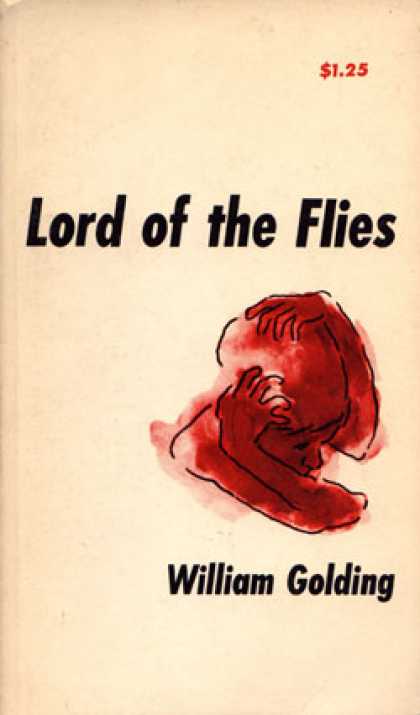
Lord of the Flies


Hello all. Well, I hope you don't expect any promises because I'm just gonna right when I want to, but yes, I'm writing again. Let's say that gap was some sort of service to the dramatic effect of a character's transformation. Or something. And that I then would be  the Unreliable Narrator. Great excuse, huh. Well then, now that that is settled, you've read the new description of this blog. It's different. So on that note, Lord of the Flies. I finished this book maybe a week ago. Here it is.

Lord of the Flies was written by William Golding in 1954.

It is a coming-of-age book, but with a few twists. First of all, the kid's 12. That's tragically soon. His name's Ralph. We don't do last names in Lord of the Flies, unless you're Merridew, of course, in which case you would be a complete nuisance, and we don't like that. So twist number two could be that they (the boys, only boys) are stuck on an island after a plane crash (very Lost-esque, surprisingly so, though Lost, I think, is quite incapable of thinking up such endearing names as Simon.) Twist Number Three could be that they go crazy, I suppose. Oh, and yeah, this has spoilers. Watch out.

So we have our twists, we see that Ralph and the boys are going to grow up, and we see that it is tragic, it being too soon and through some crazy island craziness. And no, none of them (the boys) act with antic dispositions intentionally. You trust the boys to be sincere. They're all very much too young to lie. Well here's something about me: The Characters are the most important aspect of a book. The Characters are the most important aspect of a book! THE CHARACTERS ARE THE MOST IMPORTANT ASPECT OF A BOOK! Must I say it again? Shout it? No? Alright then.

So the characters are the most important aspect of a book. Right, well, yes, that and everything that is piled into that word "characters". This is the contrast between the characters, the introduction and presence of certain characters for the sole purpose of complementing other characters or inducing new perspectives int that happy mind of a reader, the development of the characters, the relationships between the characters, the characters being interesting people themselves, and voila, there already is an amazing book. If you have characters, you have a book. If you love your characters, your readers will love them, or at least notice that they are very much lovable. If you hate your characters your readers will hate them and love to hate the. So, characters are the most important aspect of a book. You have to get intimate, personal.

Who's interesting then? Well, Ralph, obviously, and Jack, obviously. But then more than those two, Simon! And the conch! (yes, I do consider that shell a very much live character) And if we're accepting the conch as a character, why not then the Lord of the Flies. That may be it. After them, there's Roger, who's just plain evil, Piggy, who's just plain annoying, and Samnerice, who are just plain cute and just plain kind. Of course that name makes him/them interesting, as well as their extreme loyalty, but honestly, Ralph, Jack, and SIMON.

Ralph comes out in the beginning. He has a golden young body past round baby bellies and premature of teenage awkwardness. He has a mildness about his mouth and eyes. There is no devil in him. Oh, I loved Ralph, love Ralph. Him and his fair hair that he always has to put back and can't put up because then he'll look like a girl. Ah, Ralph. Well, he becomes very much interesting in that he changes in the most subtle ways. Most everyone else gives up in the book. It's all very clear: childish innocence to savage savagery. Simple. But then there's Ralph. He was innocent, I guess, and childish to some extent. Well, he stands on his head when he's happy, and laughs at Piggy's name and makes fart noises with the conch. But, he does have something else. "We have to keep the fire going. It's the most important thing." That's not very kid. That's very adult, I think, and adults hide change much better than kids. Well, I've drawn it out long enough. So you know Ralph's curtain? The one in his head? One of the most interesting images in that book? Wonderful. Piggy finisheds his words. The ideas are vaguely there but slipping away, and Ralph denies it. He resists it, and he resists all chaos, savagery. That's why he's so good. Of course he slips. He joins the chanting once in a while, eats meat, but he's still good. We sympathize with him. But that curtain. That's important. Remember it, for it is so applicable. Remember Flowers for Algernon? Charly? Same thing. Remember Memories of Summer? Same thing. Remember Monet and his decaying vision? Remember his grasping at colors, his visors and labels? Same thing. It's recurring guys. Grab on to that memory. Apparently it slips.

So Jack. He's plain obnoxious. You feel sorry for him. I mean, when he has tears running down his face, when he loses that first revolution? You have got to give him some credit. He could sing C sharp after all... That was meant to be sarcastic. Jack. He is exciting; that's for sure. The standoffs between him and Ralph, crazy stuff huh. The scene at the Castle Rock with spears, tying up Samneric, at the voting sessions, when the fire goes out, all of it's furiously intense. Thrills to watch those two together with their low voices and dry responses and challenging tones and gentle grimaces. And the people that come between them... Oh, man 'tis dangerous when the baser nature comes between the pass and fell incensed points of mighty opposites, no? Yeah, I guess this really doesn't contain any spoilers, or much at least. If you haven't read it you must be so lost at what I'm blabbering on about.

Well, Simon now, I guess. Well Simon was my favorite character. It's tough, this one, since he drops out pretty soon in the book, but the time he has on stage is priceless. He comes out in these bits, these random, short indentations. These passages thrown in irrelevant to the previous and insignificant to the following, filled with mesh and grass, those creepers, all the butterflies and that kind of stuff; these are the ones where Simon, or maybe sometimes you just guess it's him, comes out by name, and then it's done and that's that. "He squatted down and parted the leaves and looked out into the clearing. Nothing moved but a pair of gaudy butterflies that danced round each other in the hot air. Holding his breath he cocked a critical ear at the sounds of the island; the sound of the bright fantastic birds, the bee sounds, even the crying of the gulls that were returning to their roosts among the square rocks, were fainter. The deep sea breaking miles away on the reef made an undertone less perceptible than the susurration of the blood." Stuff like that. I love it.
He's so wonderfully strange and wise and peaceful. He's a pure boy. Those comparisons between him and Jesus though; well think whatever you want, but it's kinda stretching it, don't you think? Simon definitely has some descriptions, settings and does some things and has things happen to him that are remarkably similar to Jesus, but still, it's Simon. If Simon was Jesus, it's be too tragic; not that what happened to Jesus wasn't tragic. But at least we have Christianity now. Well, in that case, I guess LOTF would be the Bible.

Well, regardless of that wonderfully random tangent, Simon, is still a very unique character, amongst the others within the book and within all characters. You hardly ever get multiple people claiming the same sub character as their favorite in the book. Sort of like Jo from Great Expectations. They're just arresting. They're staggering in their goodness, strangeness, uniqueness, loveliness. Simon is definitely lovely if nothing else. He's wonderful. And one last thing on Simon. That obvious scene, with the Lord of the Flied. It's obvious for a reason. It's awesome. When you reread it eight times and think about it, put yourself in his head and outside and in the island and in the real world at all the same time, you get these understandings. You realize what it all is, and the tragedy and unprecedented and simple truth of it all, that theory of flies and death and a stick sharpened at both ends. It's his sub-conscience., or even deeper, a very real part of his brain, a very tangible thought that he had blocked away, repelled, is boomeranging back and shooting itself with full forth. That's what happens when you're too good. It catches up to you in the most awful ways. Only the most noble suffer truly, right? Finny from A Separate Peace? Him on his separate plain, being pulled down by stupid bone marrow, all because he never feared and he never hated, and he saw the enemy as who they were, misled humans, mistaken friends or potential friends, and Finny could be friends with Oscar the Grouch if he wanted to: same thing. You get pulled down, and if you try to stand up again, this is what happens: you get chanted at. It's awful y'all, but you could at least stay the martyr hero. Finny didn't punch Gene like we all wanted him to. LOTF is harder to relate to, I guess. None of us secretly want to have those painted faces, or at least I hope none of us do. But still, we would, I guess, want to have fun on the island. The pig said to have fun on the island. Well, Simon climbed a mountain instead. Hoorah! Very Moses, might I say. So yeah, Simon's pretty chill.

Who else? Right, the conch. How could I forget. Right, curtain. Creepy! Well, yes the conch is white and pure, as all good things are. You can't really get tired of it though. Gotta love the classics. It's creamy too though. And pinkish. Now that's respectable. When Piggy and Ralph found it, it's so absolutely obvious that this was going to be the dominant symbol in the book. It was, though there were a bunch of other things (the masks, the rocks, the fruits, the fires, the pigs, etc.) Still, the conch is by far the best and most consistant. It was the third character. Ralph, Piggy, and then the Conch. It makes sounds. Like a trumpet. That's some civilization for you. A sound, almost musical. That's comforting. It's smooth, it's fragile. It's fragile! Let's say that again. Yes, fragile, and they just pass it around. Gotta love boys right? No dainty fears. Well, peace, sanity, civilization, childhood must be shared. It's Ralph that has the conch. It doesn't count on the Castle Rock though. Very sad, isn't it. We see the Conch so significantly playing as a main figure in this book, but it diminishes. They grow up, remember? Then it shatters. Honestly, I cared more about the Conch than anything else in that scene.  I just love the conch. I could go on for hours. I will say one thing though. The Conch was a Ralph thing, not a Simon thing. Piggy would've liked it, but on account of his ass-mar and all. He's too boring for it anyways. Ralph has a dwindling hope, that is more dependable than absolute hope, and definitely better than lost Jack-esque folk. Simon had the island. The good island. And Simon had himself. And Simon had Ralph. But he didn't have the Conch. He wasn't very human actually. Neither was the Conch. Hmm. Something to think about.

Well, that's good enough I suppose. I'll leave you all with some quotes.

"You know perfectly well you'll only meet me down there - so don't try to escape!"
"Wave after wave , Ralph followed the rise and fall until something of the remoteness of the sea numbed his brain. Then gradually the almost infinite size of the water forced itself on his attention. This was the divider, the barrier."
"If I blow the conch and they don't come back; then we've had it. We shan't keep the fire going. We''l be like animals. We'll never be rescued."
"Fun and Games"

Read folks, Read.

Monday, July 26, 2010

Here Goes Nothing

Hey, whoever's reading, which is no one. This would be my first blog, and I'm not sure what to say, not knowing anyone to have ever done this before, and I sure am not one for proper introductions so I guess I'll jump into it. It's midnight after all.

So it's 12:28 AM on this extremely early Monday morning and I haven't slept for three days now...roughly. I am sitting on my couch, as often we do when it is late (or I suppose early), Monday, the summer, and you had seen your friends and been in societal contact for so long that the inside of a home, where you could really do absolutely nothing so visibly progressive, feels good, and the thought came upon me that I was bored. I had been in the company of teenage American girls for quite a while without breath, which anybody should know is quite the tiresome experience, and so I opened the family laptop. Yes, the family Dell. I'm 16. I learn to share. The lap top on my lap, butt on couch, I automatically check my email, do SAT prep q's for no good reason, check facebook, become exasperated, get megavideo on to watch some reruns of Star Trek and then, voila: I wonder at whatever happened to Wil Wheaton (aka. Wesley Crusher) find his blog, read it, join twitter, and then watch a blog tutorial, and suddenly I'm speaking to the phantom of audience, and then I quit twitter (I'll leave quitting facebook for another day). I really do wonder whether people ever should make decisions past midnight, or rather past three days and two midnights. I suppose they shouldn't, as I have just burnt my finger with a candle, but then again, bad judgement really must be needed at some times in order to make those beneficial decisions which you never would have made thinking straightly. So I suppose I'll be impulsive, not that creating a blog that nobody will read is very impulsive anyways. You'll learn a lot more about me. I guess I should give you a summary. Hold on, it follows soon. If you are amused at all, stay. If not, enjoy the sunlight. All right, here it is.

Gender: female

Birth Year: 1994

Ethnicity: Japanese/Ecuadorian

Religion: Catholic

Residence: Bay Area (but soon to be France)

Interests: Art (painting), philosophy, music (everything... mostly), literature, cooking, film

Instruments: horrible clarinet in marching band, even worse piano, self-taught acoustic guitar

Favorite Books: Sherlock Holmes, Les Miserables, Brave New World, Rimbaud's poetry

Favorite Films: Stand By Me, Finding Neverland, What's Eating Gilbert Grape?

Note: I am ridiculously crazy about four things: The Beatles, Leonardo da Vinci, Shakespeare, and good literature.

Wow, truly, congratulations if you stuck through for so long, that is until the bottom of this page, here. I guess that sums me up rather poorly, but you'll catch on as you go, I guess, and if you are out there in existence, I will read your comments and get to know you too, ghostly friend, so see you (figuratively and hopefully).

PS. I love the rain. If I could marry it, I would, and we would dance endlessly at our wedding to some of our water music.

I love daffodils because they are yellow and perky. They grow in clumps and make you giggle with the surprise of spring. If I could pick them, I would put one in a jar, but then I would be horrible, and no longer will I bear to look at daffodils.

I love the woods because they are conventional and they are ancient.

I love fire because I am a moth.

I love cigarettes because I've never smoked one, and they create tinges in an instant, on screen, that demands one to enter a group of many submitting.

I love fog. I love hardly anything more than fog. You enter fiction when you witness fog. Booth says we like it because it is ironic. Well let that be, and therefore I love irony.

I love the young dead because they have lived more than most, and we have to say that because otherwise it'd be cruel. And I think of young death often, but I have not lived enough.

I love the mountains because they make you want to yawp.

I love echoes because they carry your yawps, and they make conceivable the concept of not being forgotten.

I love Prague because she is cheery and aged and wise at once. She is the graveyard of genius and the womb of despair, anguish, balconies and bridges. Those ones that you see countless towers and domes from, lined with saints, tradition, the luckiest of homeless men.

I love the French, for I am a dejected, regretful, wretched, miserably artistic and sorrowfully abstracted American.

I love time. Time and I have never been concerned with each other. And I opt for love. Between love and bitterness? You'd think it would be obvious. For me it is, and for that I am very thankful.

I love the darkness because it makes me feel special.

I love loneliness because it makes me feel tortured.

I love the absolute because it provides me a direction.

I love surrealism because it allows me to kid myself.

I hate oceans because they are mysterious and ominous, as is outer space. I hate literary features because they are snobbish, fake, and yet necessary.

What I hate most of all is sleeping, for it is the great killer. That and hatred, for it is yet another vice.

More than anything, I love books. I love books, I love books, I love loving books.